







What is a codec?
A plain-English guide to codecs in AV - what they are, hardware vs. software, and which video and audio codecs power Zoom, Teams, Webex, and Meet.

Introduction
You are in a meeting room, on a video call with someone(s) on the other side of the world, or country, or city. Their voices and their looks have been captured, transported (up to) thousands of miles, and then recreated by the screen and speakers in your meeting room in near real-time to make that experience possible.
We can’t easily transport the real thing, or an analog of the real thing (analog signals are notoriously impractical to transmit over long distances). We need to encode that video and audio information into a simpler format, transmit it, then decode it to play in your room. The encoding and decoding of that signal is done by a [Cod]er/[Dec]oder.
Plain-Text Definition
A codec is a computer hardware or software component that encodes or decodes a data stream or signal.
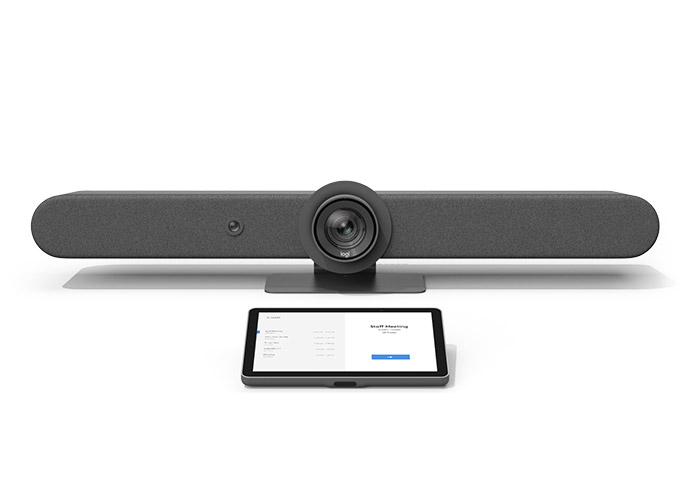
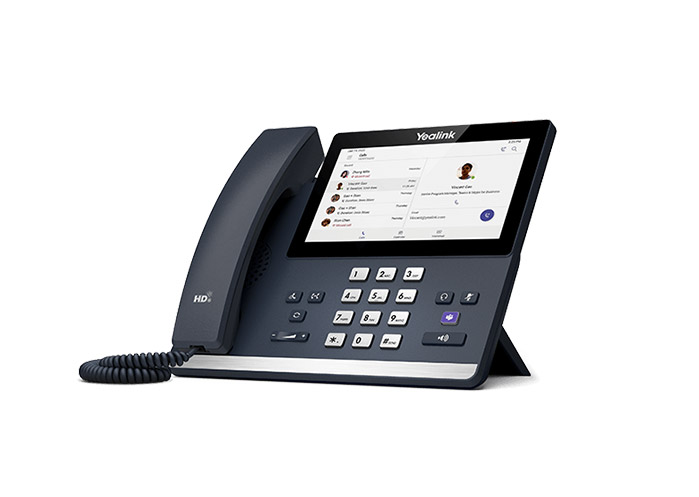
In AV, we often also refer to the hardware the controls the meeting as the codec, like a Poly G7500 or Windows MTR. they integrate codec functionality with the control, switching, and interfacing required to run a complete room system.
Common Codecs in Video Conferencing
So what’s actually doing the encoding inside these devices and applications? There are a handful of video and audio codecs that show up in nearly every conferencing environment.
Video Codecs
| Codec | What it is | Where you’ll see it |
|---|---|---|
| H.264 | The industry default for nearly two decades. Not the most efficient anymore, but it works on virtually every endpoint ever made. When a legacy Polycom calls into a Zoom meeting, this is what they’re negotiating down to. | Everywhere. Teams, Zoom, Webex, Google Meet, and every hardware codec on the market. |
| H.265 (HEVC) | Better compression than H.264, but a patent licensing mess – multiple competing pools all wanting a cut. | Common in broadcast and streaming. Never really took off in conferencing because royalty-free alternatives caught up. |
| VP9 | Google’s royalty-free alternative to H.265. | Primarily Google Meet and YouTube. |
| AV1 | Open source, royalty-free, developed by the Alliance for Open Media (Amazon, Apple, Cisco, Google, Microsoft, Netflix). Microsoft reported 63% bandwidth savings for screen sharing after switching from H.264 to AV1 in Teams. Webex rolled it out for high-motion content with automatic H.264 fallback. | All four major platforms have adopted it for screen sharing. Expect it to take over camera video as hardware decoding catches up. |
Audio Codecs
| Codec | What it is | Where you’ll see it |
|---|---|---|
| Opus | Open source, royalty-free, handles everything from narrowband voice to full-bandwidth music. The modern default. | Teams, Zoom, Webex, Google Meet. |
| G.711 / G.722 | The older ITU voice standards. You’ll recognize these if you’ve ever looked at call stats on a Cisco or Poly endpoint. | SIP-based room systems and phone endpoints. |
| Satin | Microsoft’s AI-driven audio codec, designed to maintain quality under heavy packet loss. | Microsoft Teams. |
| Cisco AI Codec | Cisco’s equivalent, targeting high-definition audio and video in lossy or low-bandwidth conditions. Announced late 2023. | Webex. |