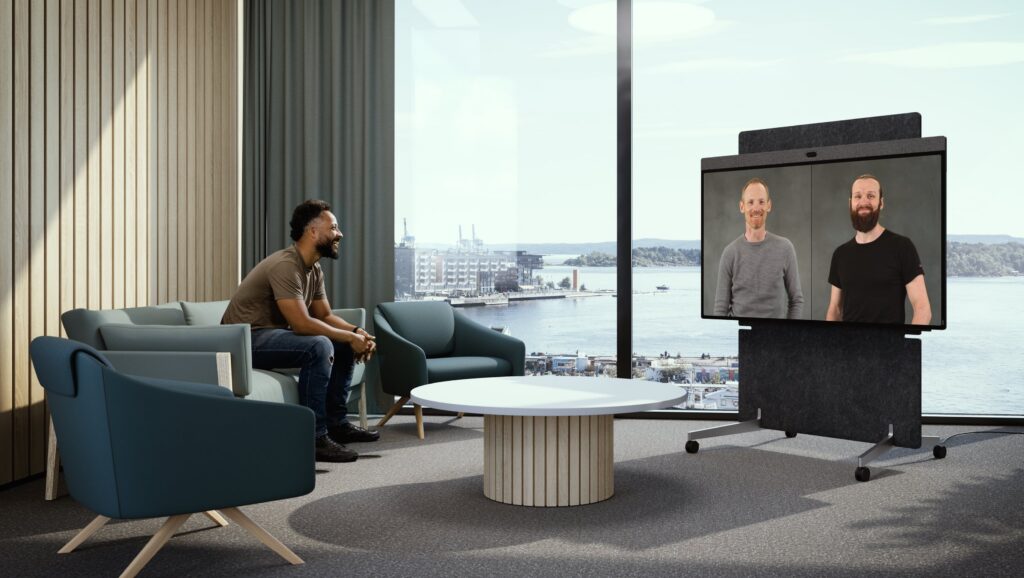
A meeting board isn’t just a mobile screen. A meeting board brings the display, camera, microphones, speakers, touch controls, whiteboarding, content sharing, and meeting experience together in one integrated system. For IT teams under pressure to modernize meeting spaces without adding complexity, that combination matters: it can bring AI into more meetings, equip spaces that are difficult to install, create meeting capacity in unexpected corners of the building, and give teams a more active way to work together, in person and remote alike.
Here are five reasons a meeting board may deserve a place in your workplace.
1. Bring AI Into More Meetings
AI-powered meetings are quickly becoming the expectation rather than the exception.
Employees increasingly rely on capabilities such as transcription, meeting summaries, action items, translation, intelligent camera framing, speaker tracking, and AI facilitation. The organization relies on that same output, the transcripts and summaries, as institutional memory. Those benefits shouldn’t be limited to meetings employees join from their laptops or to the company’s most sophisticated conference rooms.
A meeting board can extend an AI-enabled meeting experience into more spaces, so employees benefit from intelligent meeting tools wherever they gather.
🎯 Core outcome: Fewer meetings happen without the AI capabilities employees increasingly depend on.
2. Equip More Rooms Without a Full System in Every Meeting Space
Not every room needs its own permanently installed video conferencing system.
A meeting board combines a display, camera, microphones, speakers, touch controls, content sharing, and interactive whiteboarding in one integrated system. Add a mobile stand, and one board can move between spaces as needs change.
Instead of equipping every occasional-use room, an organization can deploy a shared resource where it delivers the most value.
🎯 Core outcome: Expand access to meeting technology while making smarter use of the available budget.
3. Add Meeting Technology Where Permanent Installation Isn’t Practical
Some spaces simply aren’t good candidates for conventional room installations.
A glass-enclosed conference room may have limited wall-mounting options. A rented office may restrict construction or cabling. A multipurpose space may need to be reconfigured frequently. A temporary project room may only exist for a few months.
An all-in-one meeting board can give these spaces sophisticated meeting capabilities without extensive construction or a traditional permanent installation.
🎯 Core outcome: Equip difficult, temporary, or changing spaces more quickly and with less disruption.
4. Turn More Places Into Hybrid Meeting Spaces
A productive meeting no longer has to happen inside a traditional conference room.
Today’s meeting boards use intelligent camera and audio capabilities to focus the meeting on a defined group or area. Depending on the board and the environment, that can make open and flexible areas practical for hybrid meetings for the first time.
The cafeteria after lunch, a patio, an unused office, a training area, or an open project space can all become a workable meeting space.
Core outcome: Create more meeting capacity, and more hybrid meeting spaces, without adding conference rooms or square footage.
5. Turn Presentations Into Working Sessions
Too many hybrid meetings are passive: one person presents while everyone else watches.
A meeting board gives participants a shared, interactive workspace. Teams can display content, mark it up, sketch ideas, whiteboard, compare options, and work through decisions while still involving remote colleagues.
That makes the technology valuable for more than routine video calls. It can support planning sessions, product reviews, customer presentations, training, design critiques, interviews, and workshops.
Core outcome: Help people accomplish more during the meeting, not simply attend it.
See Meeting Boards in Action
The right meeting board for your organization depends on your rooms, your platform, and the way your teams actually meet. The best way to find out is to see a few side by side.
Come test-drive several leading meeting boards side by side, put them through the same real-world challenges, and discover which one best fits your spaces and the way your teams meet.